Son[i]a #458. Francisco Huichaqueo y Catalina Alvarado-Cañuta
Deleted scenes

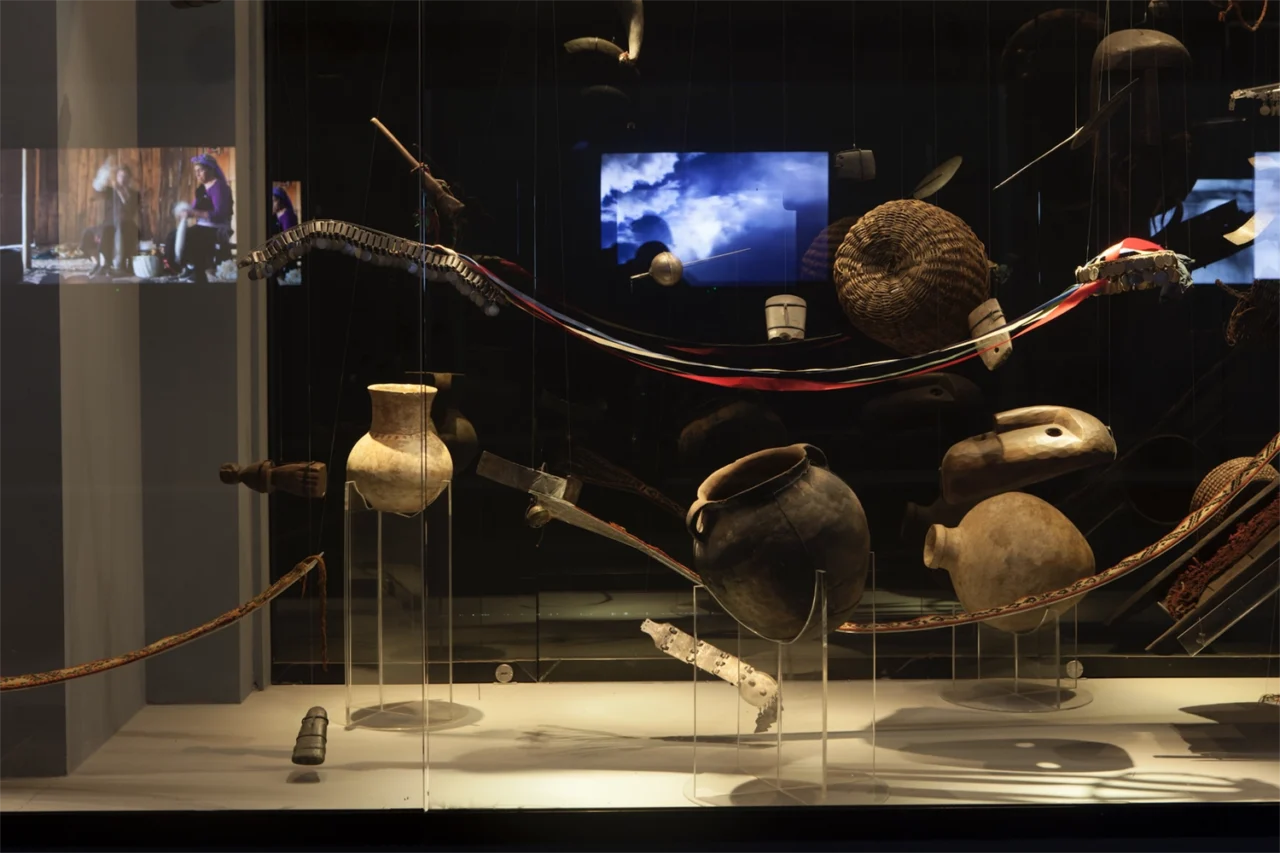
We dig up some unreleased fragments of our conversation of our conversation with Mapuche filmmaker and lecturer Francisco Huichaqueo. Drawing on memories of everyday racism, Mapudungun silences, and dreams in the revived language, Huichaqueo weaves together stories about human remains and Mapuche ‘artefacts of memory’ held in European and North American museums, restitution processes, and small acts of institutional disobedience. Art becomes a spiritual and political tactic for exercising one’s rights, opening up display cabinets, accompanying stolen objects, and sowing the seeds of the future in long-term struggles.
With the support


Funded by the European Union. Views and opinions expressed are however those of the author(s) only and do not necessarily reflect those of the European Union or the European Education and Culture Executive Agency (EACEA). Neither the European Union nor EACEA can be held responsible for them.
related episodes
Francisco Huichaqueo
In this podcast, Mapuche artist, filmmaker, curator and university lecturer Francisco Huichaqueo weaves together Mapuche culture and pewma (dreams as revelation or illumination) to reflect on his work as a filmmaker and on his encounter with colonial museums and collections. From this perspective, he talks about processes of restitution and 'Mapuchisation' of these institutions: display cases become contested spaces rather than mausoleums, artefacts of memory breathe anew, official narratives are rewritten, and Mapuche spirituality once again inhabits that which colonial violence sought to deactivate.
Yásnaya Elena Aguilar Gil
In this podcast, Mixe linguist, writer and activist Yásnaya Elena Aguilar Gil unpacks the complexities of being Mixe in Mexico and talks about the cracks that appear in an imposed identity. She dismantles the category of “indigenous” as an external, political label, claiming the right to specificity in naming herself: the right to be Mixe. She also objects to the essentialism and folklorism that seek to reduce being and speech. She turns her attention to the power of small structures, to multilingualism, to a defense of the territory, and to maize as a social ecosystem. She denounces the violence of coloniality and of the monocultural state, while also opening up horizons for reinventing communal life by practicing and imagining other ways of being in the world. Here, words are an exercise in freedom, assemblies are a social technology, and memory becomes not ruins, but revolt and future.